Presidential Infrastructure Development Fund (PIDF)
Presidential Infrastructure Development Fund (PIDF)
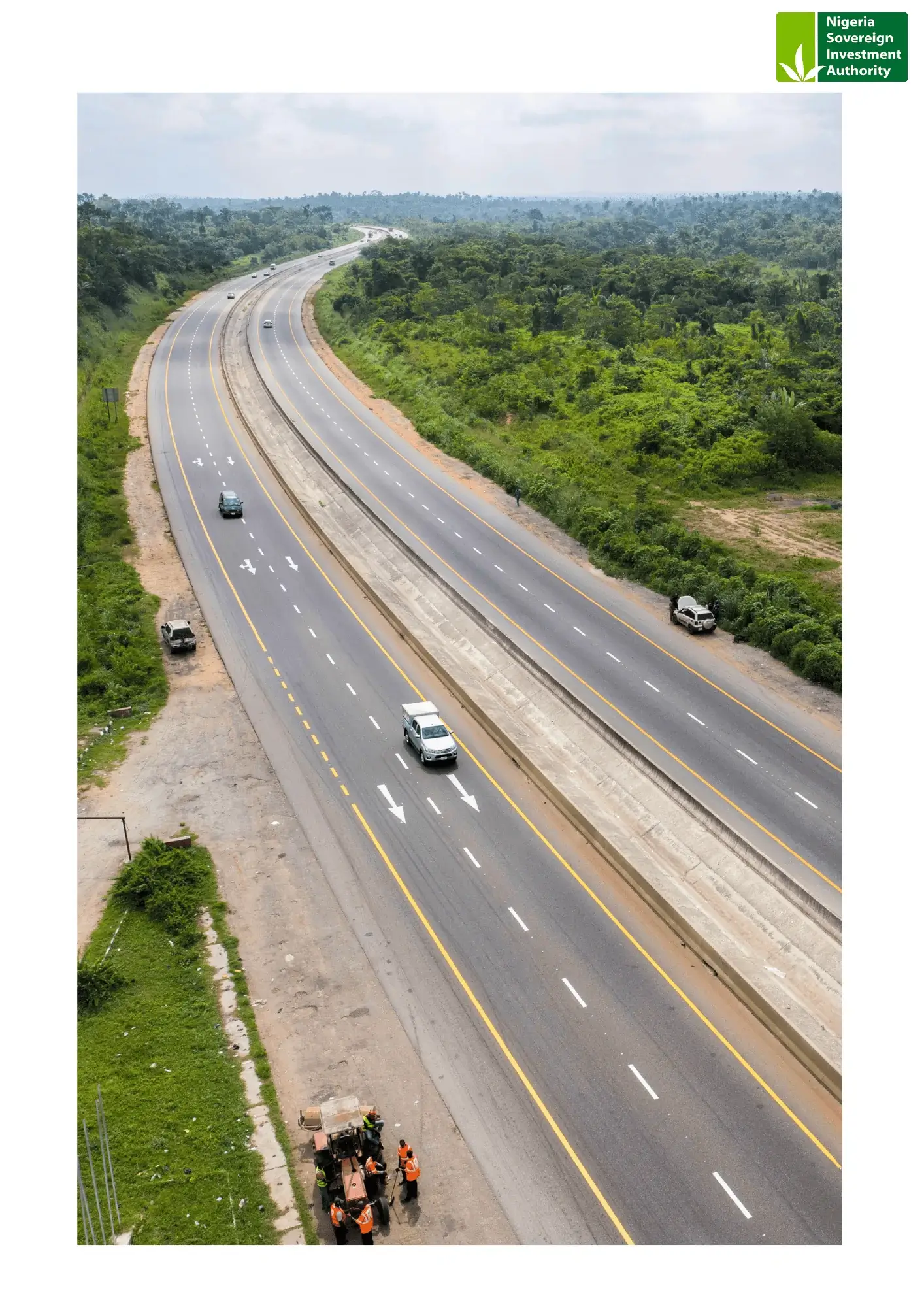
The Nigeria Sovereign Investment Authority (“NSIA”) was mandated to act as Fund and Project Manager for the PIDF, overseeing the financing and development of projects under the PIDF. The projects currently developed under the PIDF are Abuja – Kano Road, Lagos – Ibadan Expressway and Second Niger Bridge (“Ongoing Projects”).
The PIDF is being funded from various commitments made by the Federal Government of Nigeria (“FGN”) which include Budgetary Allocation, Nigeria Liquified Natural Gas dividends, Recovered Funds (Locally and Internationally) and other third-party capital. It is envisaged that PIDF will be commercialized upon completion through the development of tolls, trailer parks, Right of Way optimisation, etc.
Key stakeholders of the PIDF include the Presidency, Federal Ministry of Works and Housing, Federal Ministry of Finance, Budget and National Planning, Office of the Attorney General of the Federation, Federal Ministry of Justice, Government of the United States of America, US Department of Justice, and Government of the Bailiwick of Jersey.
Impacts of the PIDF Projects
Create Jobs and Facilitate Poverty Alleviation
Boost Economic Activity and Spur an Increase in Investments, Agriculture and Trade Between the Commercial Cities Due to the Improved and Quicker Access to Market
Drive economic growth through diversification:
Attract investments (both local and foreign) to drive infrastructure development:
Drive Community and regional development and enhance regional integration.
Recovered Funds
- As part of efforts to ensure seamless funding for projects executed under the Presidential Infrastructure Development Fund (PIDF), the Federal Government of Nigeria committed to the PIDF, Forfeited Assets Recovered from the United States of America, United Kingdom and the Republic of Ireland (Recovered Funds).
- A Trilateral Agreement regarding the sharing, transfer, repatriation, disposition and management of the Recovered Funds was signed between the Government of the Federal Government of Nigeria, the Government of the United States of America, and the Bailiwick of Jersey under some Condition Precedents (CPs) which include (i) Establishment of a project monitoring team within NSIA; (ii) Appointment of a designated independent auditor by NSIA; (iii) Establishment of a Monitoring Team by the FGN; and (iv) Engagement of one or more Civil Society Organisations (CSO) by the FGN.
- The NSIA met all its obligations in satisfying the CP’s by setting up an internal project monitoring team and procuring an independent auditor - Deloitte & Touche, to provide an extra layer of assurance on the audit and reporting of the utilisation of the Recovered Funds.
- FGN appointed CLEEN Foundation (CLEEN) as the CSO to monitor the utilisation of the Recovered Funds. The role of CLEEN is to ensure that Recovered Assets are adequately utilized and that the engineering/infrastructure, procurement process, spend analysis, safety measures and anti-human trafficking regulations are in line with best practices.
- The Project Monitoring Team comprising of the Federal Ministry of Justice (FMOJ), Federal Ministry of Finance, Budget and National Planning, Office of the Accountant General of the Federation, NSIA, Deloitte & Touche and CLEEN hold quarterly meetings to discuss progress regarding the utilisation of the Recovered Funds. The NSIA also submits periodic reports to FMOJ and the United States Department of Justice (USDOJ) regarding the utilisation of the Recovered Funds.
NSIA Recovered Assets Utilisation Reports